LAST UPDATED: Jan 10th, 2026
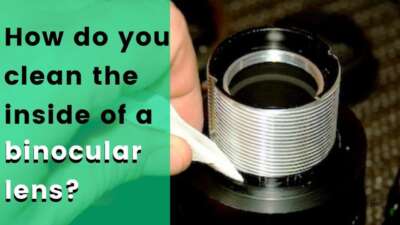
Cleaning the inside of a binocular lens is the most difficult task for a binocular owner. The short answer is: don’t attempt it yourself unless you have no other choice, because you’re essentially performing an amateur repair that voids the warranty.
A binocular consists of prisms and lenses that are carefully aligned at the factory. Taking them apart risks throwing off the alignment (collimation), resulting in double vision.
If the internal lens surfaces are dirty or foggy, follow these steps in order:
- Check the Warranty: Look at your warranty or contact the manufacturer. Most major optics companies offer repair, cleaning, or replacement services. They have the specialized tools to clean the optics and properly re-collimate the unit afterward. This is the best and safest method.
- External Cleaning: If you suspect dirt is on the outside, thoroughly clean the objective (large front) and ocular (eyepiece) lenses first. Sometimes, dust on the outside appears to be inside.
- Purging: If you see fogging (often due to sudden temperature changes or high humidity) instead of dust, your binoculars may have lost their internal gas purge (usually nitrogen or argon). Send the unit back to the manufacturer for re-purging and resealing.
- DIY Internal Cleaning (Last Resort): If the binoculars are old, broken, or not under warranty, you may attempt a cleaning. You’ll need specialized tools, not just screwdrivers, to safely access the prisms. Dust usually settles on the prism faces or the inner side of the objective lens. This process is complex, time-consuming, and highly risky.
FAQ for Maintaining BINOCULARS
How do you focus binoculars?
Binoculars use two mechanisms to achieve focus:
- Diopter Adjustment: This corrects the difference in vision between your two eyes. You must set this first.
- Cover the objective lens on the side without the diopter ring.
- Use the central focus wheel to bring the image in the uncovered eye into sharp focus.
- Switch covers, covering the opposite objective lens.
- Without touching the central focus wheel, rotate the diopter ring (usually on the right eyepiece) until the image is in sharp focus. The diopter is now set for your eyes.
- Central Focus Wheel: After the diopter is set, you only need to use the central focus wheel to sharpen the image for all subsequent viewing distances.
How to fix double vision in binoculars?
Double vision in binocular vision happens for two reasons:
- Eye Strain: If you’re looking through binoculars for an extended period, your eyes can get tired. Your suggestion to relax your eyes by looking away for a few seconds is a good fix for this type of fatigue.
- Decolimation: The two barrels are no longer aligned. This is a severe problem often caused by dropping the binoculars or striking them hard. This is a mechanical issue, not an eye issue. This requires a professional repair service to adjust the internal prisms. Using decollimated binoculars will certainly cause eye fatigue and headaches.
How far can binoculars see?
Binoculars don’t have a maximum distance you can see. They magnify the image of distant objects. How far you can see is limited by the curvature of the Earth, not the optics.
The two numbers on a binocular, like , mean:
- 10x: This is the magnification. It means the image appears 10 times closer than it is.
- 42: This is the objective lens diameter in millimeters (mm). A larger number here lets more light into the device, giving you a brighter and clearer image, especially in low-light conditions.
You want a lens diameter between 40mm and 50mm for general outdoor use, as this size balances light gathering with portability.
How to use night vision in binoculars?
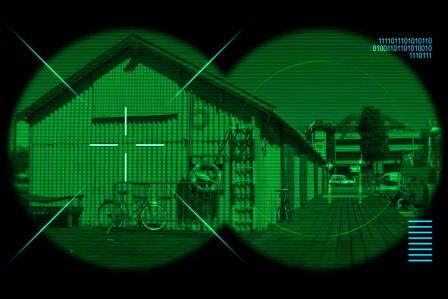 “Night vision” generally refers to specialized electronic devices that are entirely different from standard daytime binoculars.
These devices work in two ways:
- Image Intensification: They collect tiny amounts of ambient light (starlight, moonlight) and amplify it thousands of times to create a visible green image.
- Thermal Imaging: They detect heat signatures (infrared radiation) and translate them into an image. Some units use integrated infrared (IR) illuminators to “light up” a dark area with invisible IR light, which the device then converts to a visible image.
If you need to see in total darkness, you’re looking for a specialized night-vision monocular or binocular, not a typical roof-prism model.
BOTTOM LINE
Don’t risk damaging your binoculars’ alignment by attempting an internal cleaning yourself. The best course of action for dust, fogging, or double vision (decollimation) is to send the unit to the manufacturer for professional service, cleaning, and resealing. For basic use, set the diopter to match your eyes first, and if you experience double vision, rest your eyes before worrying about major damage.


